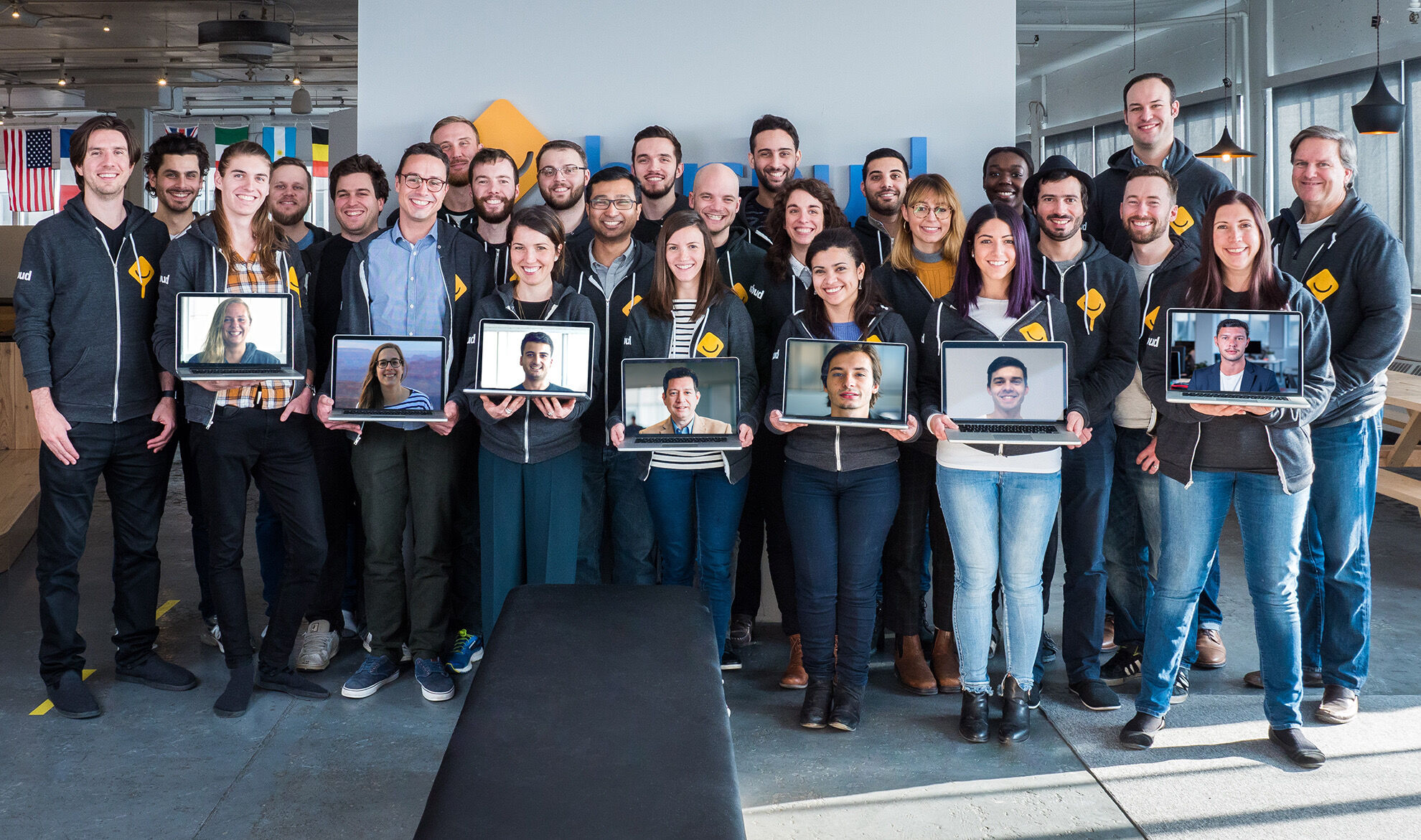
Busbud was founded in 2011 on three simple beliefs: that buying a bus ticket should be as easy as booking a flight, that selling more bus tickets is good for the planet, and that travel had become too multimodal for buses to stay invisible online.
Why we started Busbud
The first belief came out of a backpacking trip through South America, where booking a bus was far harder than it needed to be. Mobile technology could fix that the same way ride-sharing apps grew demand for shared rides within cities — a better booking experience could convince more travelers to choose the bus over a flight, a train, or a car.
The second belief was environmental. A single bus takes roughly 30 cars off the road, and buses emit about 0.03 kg of CO2 per passenger-kilometer — roughly half of what a train emits, and a fraction of a car (0.11 kg) or a plane (0.18 kg). Selling more seats raises occupancy, which raises operator profits, which funds newer, cleaner fleets: a virtuous cycle worth investing in.
The third belief was about distribution. Travelers had grown used to booking flights, hotels, and tours within minutes, yet intercity buses — which run millions of departures a week — were largely absent from the platforms travelers already used. That gap was the opportunity.
Setting the course
We borrowed a framework from Elon Musk's public strategy letters to periodically check our progress against our vision. We weren't colonizing Mars, but we believed getting more commuters onto buses instead of cars carried its own world-changing potential.
Part one: the first five years
The original idea was a mobile app that could book any bus ticket, between any two cities, from any operator, anywhere. There was no existing database to plug into — we had to build one from scratch, which meant executing on three things at once: earning the trust of the world's top bus operators one relationship at a time; integrating each operator's own systems, languages, and business logic into a single, real-time, geolocated database of routes and prices; and building a site and app that made all of it bookable on the go, with support the whole way through.
Five years in, that work added up to a platform spanning 1.3 million routes across more than 1,300 operators and 16,000 cities in over 75 countries, available in 11 languages and 30 currencies.
Part two: what's next
Coverage is strong across North America, Europe, and Latin America, and we launched our first routes in Asia and Africa in 2017 — but deep coverage on those continents is still ahead of us. That's priority one.
Priority two is the mobile experience itself. Mobile already drives most of our search traffic, and the roadmap includes better destination discovery, trip customization, more payment options, seat selection, ride notifications, and in-destination recommendations — the pieces that make bus travel feel as easy and enjoyable as booking a flight.
Priority three is working more closely with operators as they invest in Wi-Fi, power outlets, legroom, and expanded service following deregulation — showcasing those upgrades, supporting e-ticketing, and collecting rider reviews so quality keeps compounding.
Priority four is bringing intercity bus fully into the online travel industry, which has historically been built around flights, hotels, and tours. Through our API and Busbud Business, travel agents can plug into comprehensive bus supply and start selling it as the convenient, affordable, and sustainable option it is.
Priority five is mobility itself. Electric and autonomous vehicles are advancing, cities are getting denser and more congested, and buses remain one of the most efficient, scalable ways to move people at scale. Algorithmic routing, dynamic pricing, and curbside pickup are opening up possibilities we're only beginning to explore.
“Getting more people onto buses instead of cars carries real world-changing potential — that's the thread running through everything we build.”